Ellis Baumann · 16 September 2026
Polish Universities Leverage Student AI Projects for Enhanced Urban Mobility
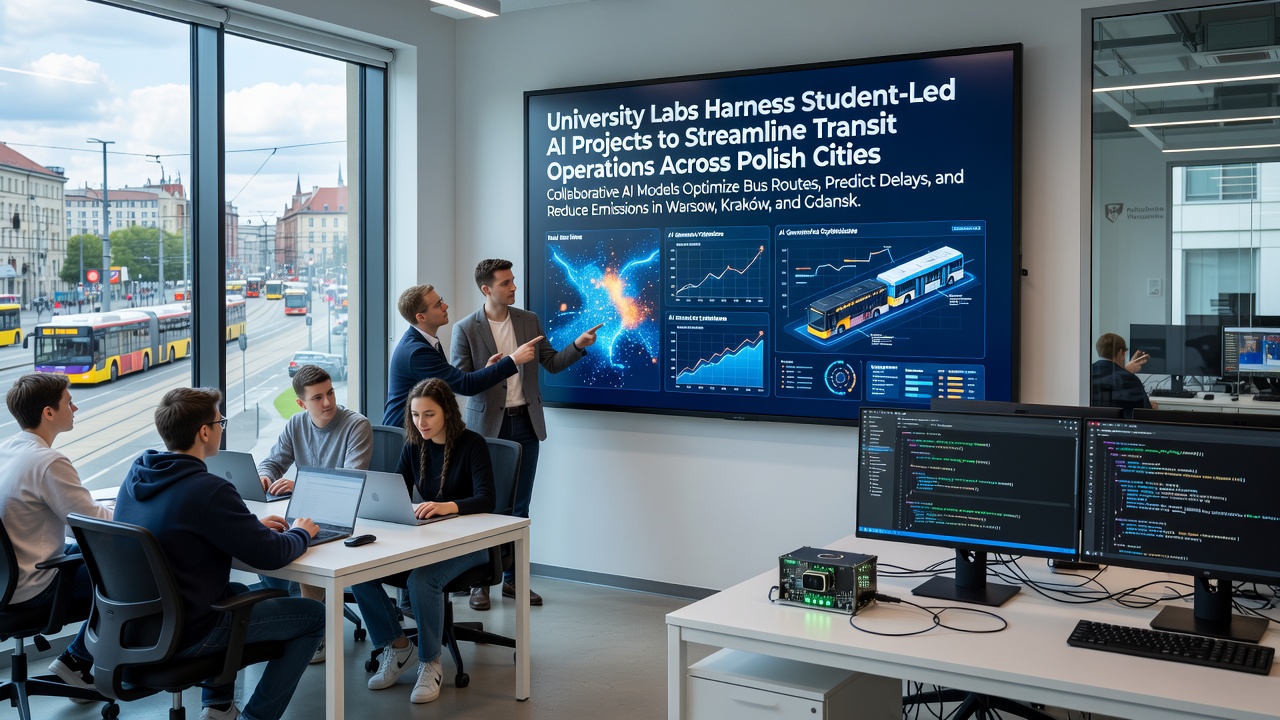
Polish universities have expanded their focus on artificial intelligence applications for public transportation, with student-led projects gaining traction in multiple cities including Warsaw, Krakow, and Wroclaw. These initiatives draw on data from local transit authorities to develop algorithms that adjust schedules, predict maintenance needs, and reduce passenger wait times. Research from academic institutions shows measurable improvements in operational efficiency where these tools have been tested.
Current Transit Challenges in Major Polish Cities
Urban transit networks across Poland handle millions of daily riders, yet face ongoing issues with congestion during peak hours and variable service reliability. Data from the Polish Ministry of Infrastructure indicates that bus and tram systems in larger municipalities experience average delays of 12 to 18 minutes during rush periods. Student teams at technical universities analyze historical ridership patterns alongside real-time sensor inputs to identify bottlenecks before they escalate into widespread disruptions.
Projects often begin in university labs equipped with access to anonymized datasets from city operators. One effort at a Krakow-based institution produced a predictive model that lowered average wait times by 9 percent on select routes after implementation in early 2025. Observers note that these student contributions complement work by established research centers, adding fresh approaches to longstanding coordination problems between different transport modes.
Student-Led AI Development Process
Undergraduate and graduate students participate through structured programs that pair them with transit engineers and data specialists. Teams collect inputs such as GPS coordinates from vehicles, passenger flow statistics, and weather variables that influence demand. Machine learning models then generate recommendations for dynamic routing and capacity adjustments. Those involved report that iterative testing cycles, often spanning several semesters, refine the outputs until they meet operational standards set by municipal authorities.
In Warsaw, a collaborative project between two universities yielded an application that integrates with existing signaling systems to prioritize trams during high-traffic intervals. Figures released by the city transport operator document a 7 percent reduction in overall journey times on monitored lines since deployment. Similar work in Wroclaw focuses on electric bus fleet management, where AI forecasts battery performance and suggests charging windows that align with lower electricity rates.
Implementation Across Polish Urban Areas
By mid-2026 several pilot programs had scaled from lab prototypes to limited citywide use. September 2026 marks the scheduled rollout of an expanded AI coordination platform in Gdansk that builds on earlier student research, incorporating feedback from riders and operators alike. This timeline aligns with national goals to modernize mobility infrastructure ahead of increased EU funding cycles for sustainable transport.
Additional cities such as Lodz and Poznan have initiated partnerships with local technical schools to address specific pain points like intermodal transfers between rail and bus services. Evidence from these efforts indicates that student-generated tools can integrate with legacy systems without requiring full hardware replacements, which keeps costs lower compared to commercial vendor solutions. Researchers tracking outcomes emphasize the value of localized data training, which improves model accuracy for Polish traffic conditions versus generalized international datasets.
Measured Outcomes and Supporting Data
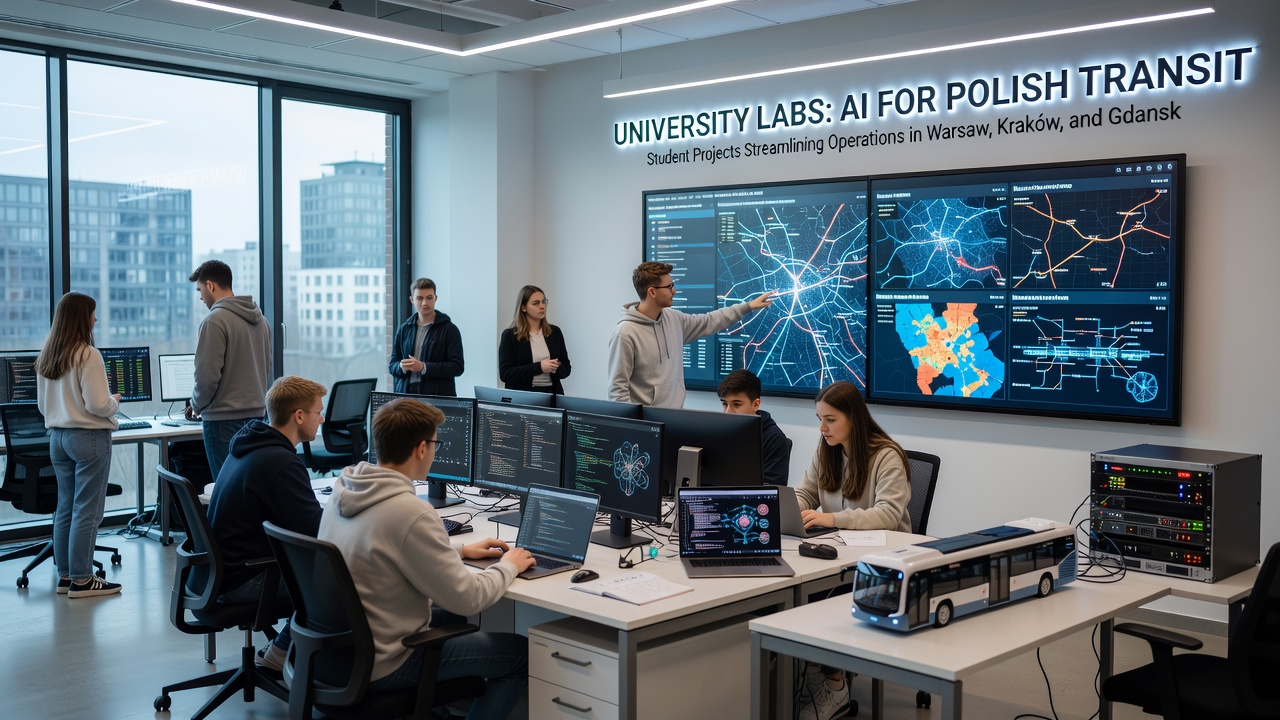
Independent evaluations conducted by academic consortia reveal consistent patterns across deployments. Energy consumption in optimized fleets dropped between 4 and 11 percent according to aggregated reports, while on-time performance metrics rose in tandem. A joint study involving multiple Polish universities and referenced by the European Commission mobility portal highlights how these gains contribute to broader environmental targets for reduced emissions in urban zones.
Transit authorities in participating cities supply ongoing validation data that helps refine algorithms further. Students gain practical experience through these feedback loops, which in turn accelerates project iterations. One case in Katowice demonstrated how an AI tool for crowd density prediction assisted planners during major events, preventing overcrowding on key corridors without additional staffing.
Future Directions and September 2026 Milestones
Plans for the coming period include broader integration of these student projects into national smart city frameworks. September 2026 will see a coordinated conference in Warsaw where findings from current pilots are presented to representatives from additional municipalities interested in adoption. Academic observers point out that continued collaboration between universities and operators could extend benefits to smaller regional networks that currently lack advanced analytics resources.
Funding streams from both domestic sources and EU programs support equipment upgrades in participating labs, ensuring students work with current hardware. This infrastructure enables more sophisticated simulations that test scenarios involving autonomous vehicles or expanded bike-sharing integration alongside traditional transit.
Conclusion
University programs continue to supply practical AI solutions that address concrete transit inefficiencies across Polish cities. Through structured student involvement, these efforts deliver incremental yet documented improvements in service reliability and resource use. As deployments advance toward the September 2026 milestones, the accumulated data supports further expansion while maintaining focus on measurable operational results.