Ellis Otto · 28 October 2026
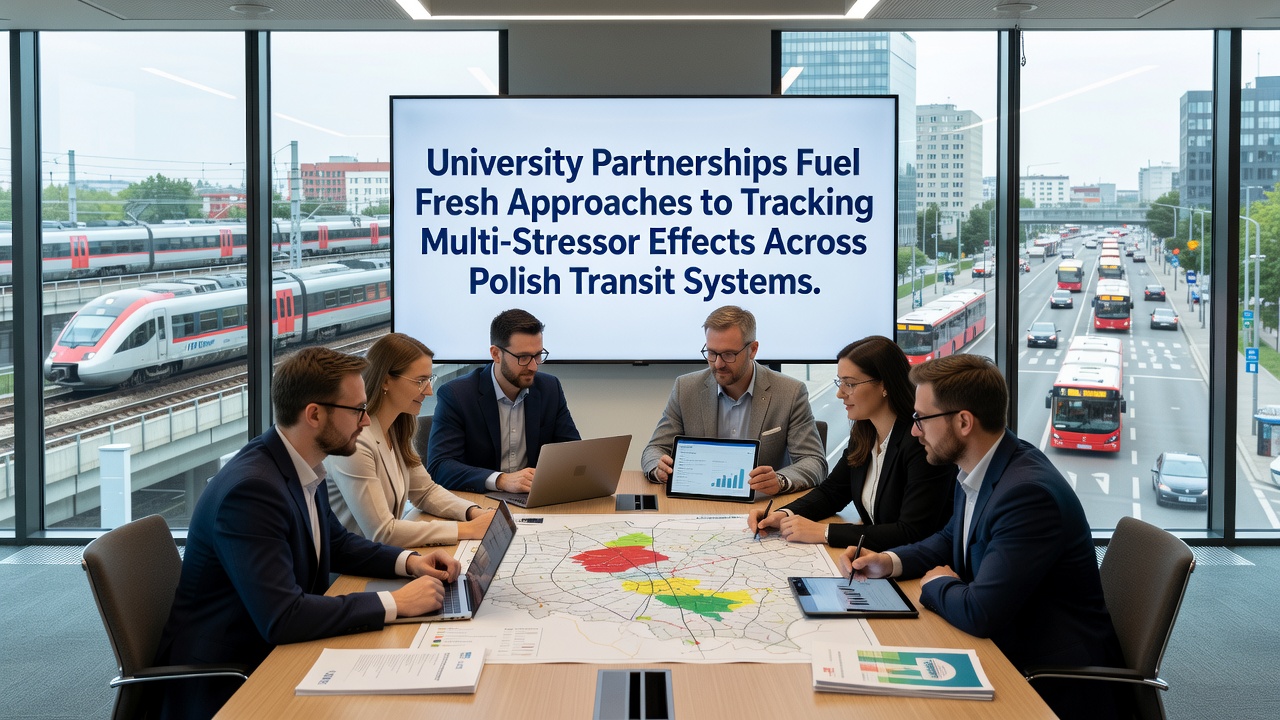
University Partnerships Fuel Fresh Approaches to Tracking Multi-Stressor Effects Across Polish Transit Systems
Polish universities have expanded joint initiatives with regional transit operators to monitor overlapping pressures such as air pollution, noise levels, vibration, and passenger flow density in systems spanning Warsaw, Krakow, and Gdansk. These partnerships combine academic expertise in environmental science with operational data from transport networks, producing datasets that track how multiple stressors interact during peak and off-peak periods. Data collection protocols established through these efforts now cover more than 180 stations and rail segments across the country.
Defining Multi-Stressor Monitoring in Urban Transit
Multi-stressor effects arise when commuters encounter simultaneous exposures that compound physical and psychological strain, including particulate matter from braking systems, acoustic peaks above 75 decibels, and crowding densities exceeding four passengers per square meter. Research teams at institutions including the Warsaw University of Technology and the AGH University of Science and Technology have developed integrated sensor arrays that log these variables at one-minute intervals. The resulting time-series data reveal correlations between elevated nitrogen dioxide concentrations and increased dwell times at platforms, patterns that single-factor studies had previously overlooked.
Transit authorities supply anonymized ridership logs and maintenance records while university groups calibrate portable monitors and apply machine-learning models to isolate stressor clusters. One project completed in 2025 mapped stressor hotspots along the Warsaw Metro Line M1, identifying three segments where combined noise and vibration metrics exceeded thresholds set by national occupational health guidelines for more than 40 percent of operating hours.
Partnership Structures and Data Sharing Frameworks
Agreements between universities and municipal operators typically span three to five years and include provisions for open-access publication of aggregated findings after a 12-month embargo. Faculty and graduate students gain access to maintenance depots for equipment installation, while operators receive quarterly reports formatted for integration into existing traffic management dashboards. The Polish Ministry of Infrastructure has endorsed these arrangements through a 2024 circular that encourages standardized metadata formats across participating cities.
Training components form another core element. Workshops held at partner universities teach transit engineers to interpret statistical outputs from random forest models that rank stressor contributions. In return, industry personnel deliver guest lectures on real-time operational constraints that influence sensor placement decisions.
Technological Tools Emerging from Collaborations
Custom sensor nodes developed under these partnerships integrate electrochemical gas detectors with MEMS microphones and accelerometers, all synchronized via GPS timestamps. Edge computing modules process raw signals locally to reduce bandwidth demands before transmitting summaries to central servers. Software pipelines built by computer science departments convert these streams into geospatial heatmaps updated every fifteen minutes.

Researchers have also adapted satellite-derived aerosol optical depth readings to supplement ground-level particulate measurements during periods when station monitors undergo calibration. This hybrid approach improved spatial coverage along intercity rail corridors connecting Poznan to Wroclaw, where fixed sensors remain sparse. Validation campaigns conducted in spring 2025 showed that fused datasets reduced estimation errors by 22 percent compared with ground-only models.
October 2026 Milestones and Expanded Scope
Planning documents released in mid-2025 indicate that a national symposium scheduled for October 2026 will convene representatives from ten Polish universities and eight transit operators to review standardized protocols for stressor indexing. The event will coincide with the rollout of a shared data repository hosted by the Gdansk University of Technology, allowing cross-city comparison of multi-stressor profiles for the first time. Preliminary modeling suggests that incorporating weather variables and event-driven ridership surges will further refine predictive capacity for high-exposure windows.
International exchanges supported by the European Research Council have introduced Polish teams to complementary work underway in Scandinavian rail networks, where similar sensor fusion techniques track thermal stress alongside acoustic load. These exchanges have prompted adjustments to sampling frequencies during summer months when ventilation demands rise.
Conclusion
University partnerships continue to generate granular datasets and analytical methods that capture the layered nature of transit-related stressors across Poland. Through sustained collaboration on hardware, data protocols, and training, these initiatives supply operators with actionable intelligence while advancing academic understanding of urban mobility environments. The October 2026 symposium and repository launch mark the next scheduled steps in scaling these approaches nationwide.